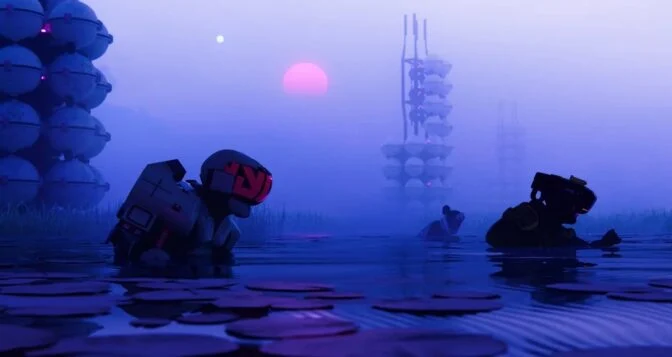
The gaming world is buzzing after the surprise release of the Midnight City expansion, which brings a neon-soaked open world, upgraded combat systems, and a dynamic weather engine designed to reshape nighttime exploration.
Developed by Neon Pulse Studio, the expansion adds more than 30 hours of fresh story content, several new factions, and a revamped progression track that rewards creativity and stealth. Players can now craft custom cybernetic upgrades, pilot armored skycraft, and build clandestine safehouses throughout the urban sprawl.
Key Features
Expanded Map: New districts, vertical cityscapes, and hidden alleyways.
Enhanced AI: Improved enemy tactics provide smarter rival encounters.
Night Cycle Reset: Dynamic lighting makes mission planning more dramatic.
Fans of the original experience will appreciate the subtle world-building updates and expanded narrative arcs. Critics are already noting the polished art direction and the stronger emphasis on player choice.
While the expansion features a premium pricing tier, Neon Pulse Studio has also announced an extensive free update scheduled for next month that will introduce new side quests, cooperative mode adjustments, and in-game photo challenges.
For players ready to dive back into Midnight City, the expansion is available now on PC, console, and cloud platforms.
If you’ve been waiting to dive back into alien oceans, there’s some bittersweet news: Subnautica 2 has officially been delayed. Originally expected in 2025, the game is now targeting a 2026 early access release. While delays are never fun, this one actually tells us a lot about what’s happening behind the scenes—and what players can expect.
A Bigger Vision Than Before
The original Subnautica set a high bar with its mix of exploration, survival, and storytelling. This time around, developer Unknown Worlds Entertainment is aiming even higher.
Some of the biggest planned upgrades include:
A brand-new alien planet to explore
Co-op multiplayer (a first for the series)
More advanced base-building
Improved visuals powered by Unreal Engine 5
It’s clear the sequel isn’t just more of the same—it’s a major evolution.
So… Why the Delay?
The main reason is pretty straightforward: the game just isn’t ready yet.
According to updates from the team and publisher Krafton, Subnautica 2 needs more time for:
Expanding the world and adding new biomes
Improving gameplay systems
Polishing the overall experience
Instead of rushing into early access with limited content, the developers are choosing to build something more complete.
Behind-the-Scenes Drama
What makes this delay more interesting than usual is the controversy surrounding it. Reports have suggested:
Leadership changes at the studio
Disagreements between developers and the publisher
Possible legal disputes over the project
While not everything is confirmed, it adds a layer of uncertainty to the game’s development. Still, the core team continues working toward the same goal: delivering a strong sequel.
What This Means for Players
At first glance, a delay is disappointing—but it could be a good thing.
With more development time, players can likely expect:
A richer, more detailed world
More content at launch
Fewer bugs and a smoother experience
And since Subnautica games typically stay in early access for a while, starting with a stronger foundation really matters.
Final Thoughts
Delays are never ideal, but in this case, it might be the right move. Subnautica 2 is shaping up to be a much bigger and more ambitious game than its predecessor, and that takes time.
For now, fans will just have to wait a little longer before exploring the depths again—but if everything goes well, it could be worth it.
How the Alan Wake 2 Studio Is Keeping a “Dying” Multiplayer Game Alive
In today’s gaming world, multiplayer titles live and die fast. One minute they’re trending, the next they’re ghost towns. But not every studio gives up when player numbers drop—and the team behind Alan Wake 2 is a great example of that.
Developer Remedy Entertainment, best known for crafting story-driven hits like Alan Wake 2, has been quietly working to support one of its struggling multiplayer experiences instead of abandoning it.
The Problem: Multiplayer Burnout
Let’s be real—multiplayer games are hard to sustain.
Even solid games can lose momentum due to:
Lack of fresh content
Strong competition
Player fatigue
When a game starts losing players, many studios shift focus or pull support entirely. It’s often just not “worth it” financially.
Remedy’s Different Approach
Instead of walking away, Remedy has taken a slower, more deliberate path.
Their strategy focuses on:
Continued updates (even if smaller in scale)
Listening closely to community feedback
Improving core gameplay rather than just adding flashy features
It’s not about chasing trends—it’s about maintaining a loyal player base.
Why This Matters
Keeping a “dying” multiplayer game alive isn’t just about numbers—it’s about trust.
When players see a studio stick with a game, even during low points, it builds:
Long-term loyalty
A stronger community
Confidence in future projects
For a studio like Remedy, which is known more for single-player storytelling, this kind of support shows they’re willing to experiment—and commit.
The Reality Check
That said, not every multiplayer game can be saved.
There’s always a balance between:
Supporting existing players
Moving on to new projects
And sometimes, no amount of updates can bring a player base back to life.
Final Thoughts
What Remedy Entertainment is doing stands out in an industry that often moves on too quickly. Whether their multiplayer project fully recovers or not, the effort itself says a lot.
In a space where games disappear overnight, choosing to stay—and keep improving—might be the boldest move a studio can make.
The DLSS Controversy: Is AI Upscaling Helping or Hurting Games?
If you’ve been following PC gaming lately, you’ve probably seen heated debates about DLSS. What started as an exciting graphics breakthrough has turned into one of the most controversial topics in modern gaming.
So what’s the issue—and why are players so divided?
What Is DLSS?
DLSS (Deep Learning Super Sampling) is a technology created by NVIDIA that uses AI to boost performance in games.
Instead of rendering a game at full resolution, DLSS:
Renders at a lower resolution
Uses AI to upscale the image to look like higher resolution
Improves frame rates without a huge visual hit
On paper, it’s a win-win: better performance and solid visuals.
Why People Loved It at First
When DLSS first launched, it felt like magic—especially for players with mid-range GPUs.
Benefits included:
Higher FPS in demanding games
Ability to use ray tracing without destroying performance
Longer lifespan for older hardware
Over time, newer versions like DLSS 2 and 3 improved image quality significantly, making it harder to tell the difference from native resolution.
So Where Did the Controversy Come From?
As DLSS became more common, some players started noticing a shift in how games were being developed.
1. “DLSS Is Becoming a Crutch”
One major complaint is that developers may rely too heavily on DLSS instead of optimizing their games properly.
Instead of:
Fixing performance issues
Some studios:
Ship demanding or poorly optimized games
Expect DLSS to “fix” performance
This has led to frustration, especially for players who prefer native rendering.
2. Locked to Specific Hardware
DLSS only works on NVIDIA RTX graphics cards. That means:
AMD users can’t use it
Older GPUs are left out
While alternatives like AMD FidelityFX Super Resolution exist, many argue DLSS still has the edge in quality—making the divide more noticeable.
3. Fake Frames? (DLSS 3 Debate)
DLSS 3 introduced “Frame Generation,” which uses AI to create entirely new frames between real ones.
Critics argue:
These aren’t “real” frames
Input lag can increase
Performance numbers can feel misleading
Supporters say:
It still improves smoothness
It’s optional
The tech will only get better
The Other Side: Why DLSS Still Matters
Despite the controversy, DLSS is still incredibly valuable.
It allows:
Smaller GPUs to run modern games
Developers to push graphical boundaries
Players to enjoy smoother gameplay overall
And for many gamers, the benefits outweigh the downsides.
Final Thoughts
The DLSS debate really comes down to one question: should AI be a tool—or a shortcut?
There’s no clear answer. DLSS is both a powerful innovation and, in some cases, a safety net for less optimized games.
What’s certain is this: as AI continues to shape gaming, conversations like this aren’t going away anytime soon.
Slay the Spire 2 Guide: What to Know Before You Climb Again
The return of Slay the Spire 2 brings new systems, new characters, and a fresh layer of strategy to a formula that already defined the genre. While it builds on the foundation of the original Slay the Spire, the sequel is shaping up to reward smarter decisions and tighter play even more.
If you’re jumping in early or preparing for release, here’s a practical guide to help you stay ahead.
Build Around Synergy, Not Power
One of the easiest traps to fall into is picking cards based on how strong they look individually. In Slay the Spire 2, synergy matters more than raw power.
Instead of asking: “Is this card good?”
Ask: “Does this card improve what my deck is already trying to do?”
A weaker card that fits your strategy will outperform a stronger card that doesn’t. Focus on building a deck where cards enhance each other consistently.
Keep Your Deck Lean
Deck size management remains critical. A bloated deck leads to inconsistent draws and weaker turns.
Prioritize:
Skipping card rewards when they don’t fit
Removing starter cards whenever possible
Avoiding unnecessary filler
A smaller, focused deck allows your strongest plays to show up more often, which becomes increasingly important in later acts.
Adapt to New Mechanics
The sequel introduces new systems and interactions that change how runs develop. While exact mechanics may vary depending on updates, expect:
More complex status effects
New resource interactions
Greater emphasis on timing and sequencing
Take time early on to experiment. Understanding how new mechanics work will give you a major advantage over players who rely only on habits from the first game.
Prioritize Upgrades Early
Upgrading cards is often more valuable than healing, especially in the early and mid game.
Upgrades can:
Reduce energy costs
Increase damage or block significantly
Improve consistency
Stronger cards mean shorter fights, and shorter fights usually mean less damage taken overall.
Relics Define Your Run
Relics remain one of the most important factors in determining success.
When evaluating relics, think about:
How they interact with your deck
Whether they solve a weakness
If they push your strategy further
A relic that fits your build can be more valuable than one that is generally considered “strong.”
Plan Your Path Carefully
Map decisions are just as important as combat decisions.
A balanced route should include:
Early fights to build strength
Campfires for upgrades
Elite encounters when your deck can handle them
Avoid overcommitting to elites if your deck isn’t ready. One bad fight can end a strong run.
Learn Enemy Behavior
Just like the original game, enemies follow patterns. Learning those patterns is essential.
Once you recognize them, you can:
Block only when necessary
Time your attacks more effectively
Prepare for high-damage turns
Knowledge of enemy behavior often matters more than raw deck strength.
Take Smart Risks
Success in Slay the Spire 2 comes from balancing caution with calculated risk.
Good risks:
Fighting elites when you have momentum
Taking a key card that completes your build
Skipping healing to upgrade at the right time
Bad risks:
Adding cards that don’t fit
Entering difficult fights unprepared
Relying on luck instead of strategy
Final Thoughts
Slay the Spire 2 is not just more of the same—it’s a deeper, more demanding evolution of a proven system. Players who focus on synergy, consistency, and smart decision-making will see the most success.
The key is not to play more aggressively, but more intentionally. Every card, relic, and path choice should serve a purpose. If you can do that, your chances of reaching the top improve dramatically.
Marathon Has Fans Racing to Kill 500 Million Robots — And the Finish Line Is Still Far Away
Since the launch of Marathon, one of the biggest talking points among players isn’t just combat or loot — it’s a massive community‑wide challenge that has the fanbase grinding together toward a common goal. The objective? Kill a cumulative 500 million UESC robots across all players to unlock the mysterious new Cryo Archive map.
That sounds straightforward on paper: play the game, kill bots, watch the progress meter climb. But the reality has been slower and more complex than many expected.
A Community Goal Unlike Anything Else
The robot‑kill count is part of an alternate reality game (ARG) tied to Marathon’s post‑launch content. Instead of offering a new area immediately, the developers tied the unlock to a collective community target. Kill enough of a specific faction of enemies — in this case UESC security bots — and the map unlocks for everyone.
A fan‑tracked progress site shows that players have reached roughly 65–70 percent of the goal so far, meaning there are still tens of millions of robot kills left before Cryo Archive goes live.
Why It’s Taking Longer Than Expected
There are a few reasons this communal grind hasn’t wrapped up as quickly as many hoped:
1. Expectation vs. Reality Some players anticipated that the series of battles would push the kill count over the threshold within a weekend of release. That hasn’t happened. While kills are steadily accumulating — nearing 330 million according to community tracking — the pace means the final push could take days longer than many expected.
2. How Players Engage With the Game Marathon is primarily focused on competitive PvP and extraction gameplay, not PvE bot slaughter. Many players are tackling contracts and objectives that don’t always involve large rosters of UESC enemies, which slows the overall kill rate compared with games designed around PvE swarm content.
3. Community Perceptions and Feedback On forums and subreddit threads, reactions are mixed. Some enjoy the sense of shared achievement and the challenge of a distributed goal. Others feel the target number was calibrated based on an assumed player base and engagement level that hasn’t materialized, making the progress feel artificially slow.
There’s even debate over whether the ARG is truly driven by players or if the developers will eventually step in to trigger the unlock on their own timeline. Some community voices argue that the kill target isn’t as meaningful as it seems — that the developers control the narrative more than players realize.
What This Means for the Community
The delayed unlock has become part of the Marathon launch experience. It’s sparked discussion about live‑service design, community events in multiplayer shooters, and how goals tied to global metrics should be balanced against player engagement.
For now, fans still logging in and contributing to the kill count are treating it like a marathon in its own right — a slow, communal race with that finish line just out of reach.
No one knows exactly when the Cryo Archive map will unlock, but if current trends hold, it may be later this week rather than this past weekend as some initially hoped

![The Wait For Subnautica 2 Is Finally Over In May After Messy Legal Battle [Update]](https://griffinkey.design/project3/wp-content/uploads/2026/04/34082d1df4965f83fb473c767bbd42d8330c10d8-1.png)